
The different types of diving: free, scuba, technical, scientific, and commercial
From freediving to commercial diving, get to know the main types of diving that exist and what sets each one apart.
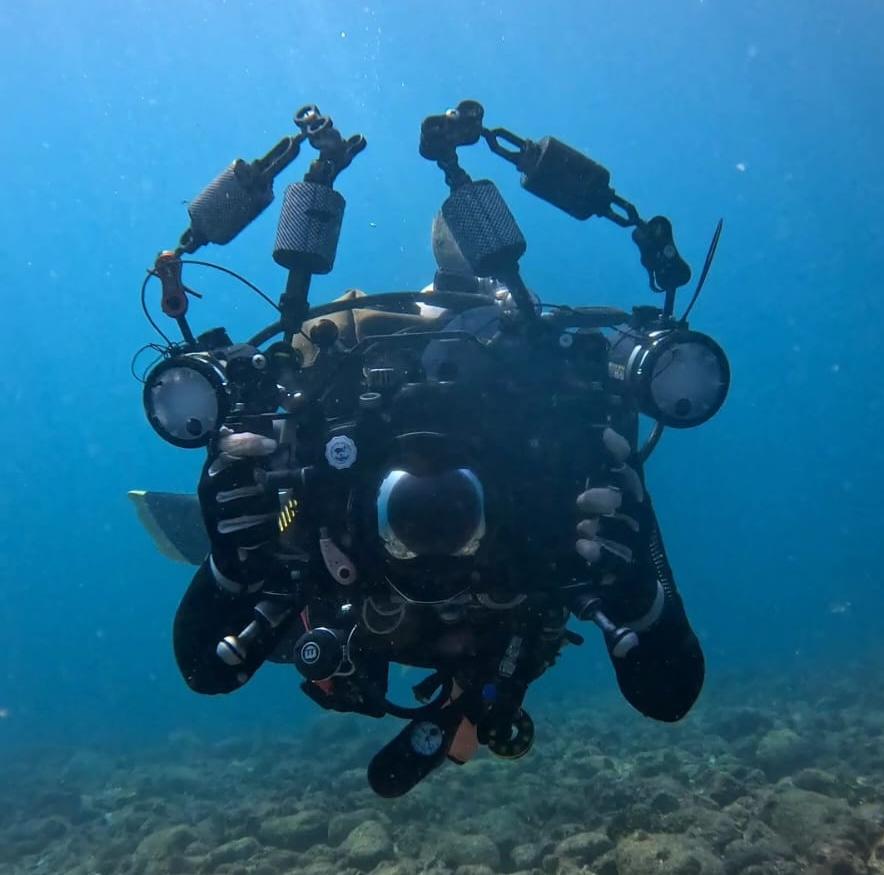
When people think of diving, they usually picture a tank and regulator, but the world of diving is much broader than that. There are several distinct types of diving, each with its own gear, training, and goals — from freediving, done on a single breath, to commercial diving, carried out by professionals working on underwater structures. Understanding the differences helps place recreational scuba diving, the kind we practice here at Búzios Divers, within that bigger picture.
Freediving is one of the oldest forms of diving: the diver holds their breath and descends with no tank or breathing gear, relying solely on their own breath-hold. It requires breath-control training, swimming technique, and above all serious safety awareness — it's never practiced alone. It's done both recreationally and competitively, with disciplines built around depth or time underwater.
Scuba diving is the best-known and most widely practiced form of diving — it's what Búzios Divers teaches and runs day to day. The diver carries a compressed-air tank and breathes through a regulator, which allows for much longer bottom times and more freedom of movement than freediving. SCUBA, in fact, is an acronym for 'Self-Contained Underwater Breathing Apparatus.'
Technical diving is an advanced extension of scuba diving, meant for divers who already have significant recreational experience. It goes beyond recreational limits — depths past 40 meters (130 feet) and/or planned decompression stops — and often involves overhead environments like large wrecks or caves, plus specific gas mixes such as trimix.
Scientific diving is geared toward research: marine biologists, underwater archaeologists, and geologists use scuba diving as a work tool to collect samples, make observations, and monitor ecosystems. It usually requires additional specific training, since it's often carried out under different conditions and protocols than ordinary recreational diving.
Commercial diving, meanwhile, is a professional activity focused on building, repairing, and inspecting submerged structures — oil platforms, ship hulls, bridges, and dams, for example. It requires its own specific certifications (different from recreational certifications from agencies like PADI), rugged gear that often includes a helmet and surface-supplied air, and frequently involves tougher working conditions, like murky water and low visibility.
Each of these types of diving has its own community, gear, and purpose, but they all come from the same curiosity about the underwater world. For beginners, recreational scuba diving is the most accessible entry point — and from there, it's possible to move on to technical, scientific, or even commercial diving later, if that's where your interest takes you.
You might also like
What is technical diving?
Diving beyond recreational limits: what defines technical diving, what gear it takes, and what the training path looks like.
What does SCUBA stand for?
The quick answer to a question a lot of people have asked: where the word SCUBA comes from and what it actually means.
What are the scuba diving certifications?
From a try-dive to the Instructor level: understand the PADI certification ladder and where you can start climbing it.