
What does SCUBA stand for?
The quick answer to a question a lot of people have asked: where the word SCUBA comes from and what it actually means.
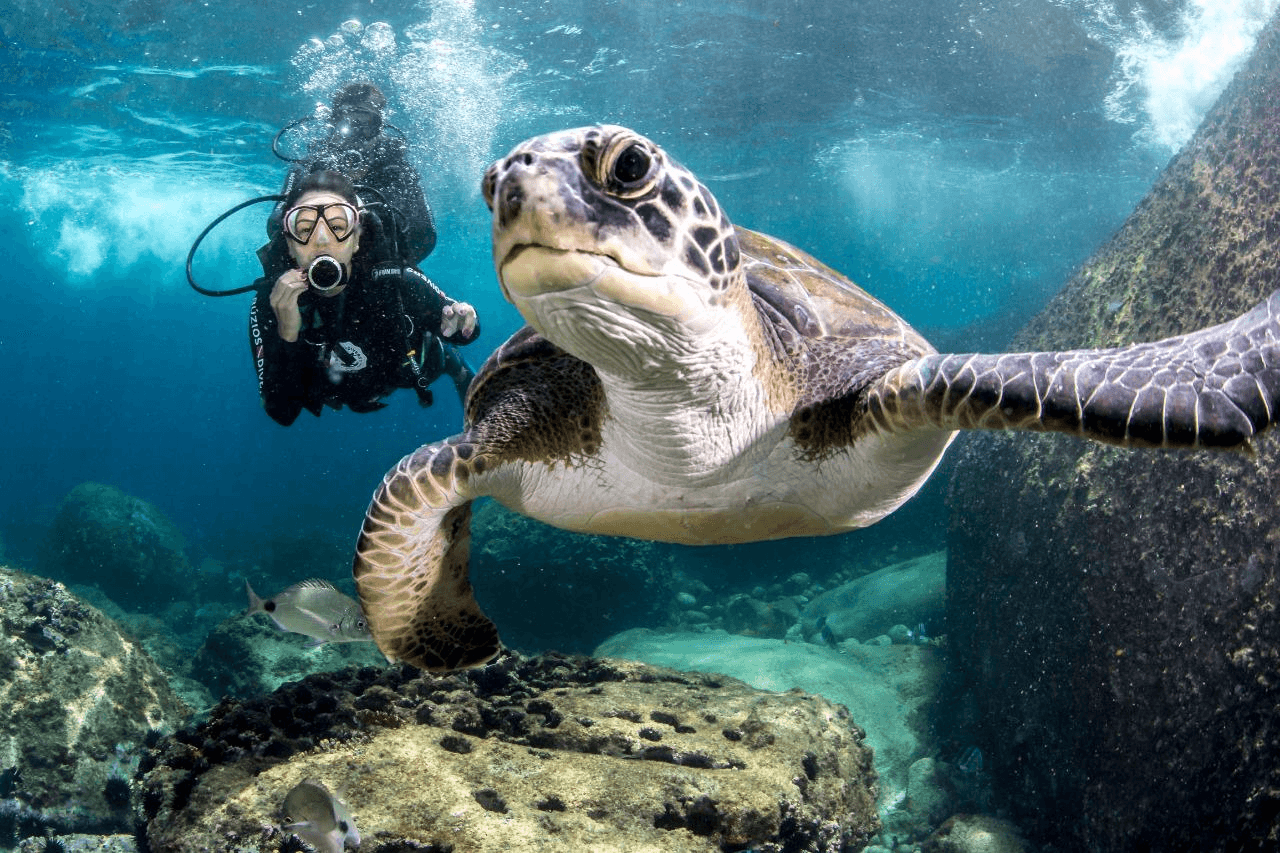
SCUBA is an acronym — not an ordinary word like it might seem at first glance. It stands for 'Self-Contained Underwater Breathing Apparatus.' That's exactly the core idea: gear that carries its own air supply, with no hoses connecting the diver to the surface.
The term — and the concept behind it — is generally credited to American physician and engineer Christian J. Lambertsen. In the early 1940s, Lambertsen developed a self-contained oxygen rebreather for U.S. military use, and he's credited with coining and patenting the term 'Scuba' in the early 1950s.
Before that, staying underwater for long periods meant heavy helmets and air hoses running to the surface — the opposite of the freedom of movement scuba diving offers today. The idea of a truly self-contained rig, carried on the diver's own back, is what changed diving as we know it.
Today, in practice, the word SCUBA has basically become synonymous with recreational scuba diving itself — a tank on your back, a regulator in your mouth, and the freedom to swim in any direction, with no cable or hose tying you to the surface or a boat.
It's a curious thing: a technical acronym, coined to describe a piece of military equipment, went on to become one of the most widely used words in the world for a leisure activity. 'Let's go scuba diving' is a common phrase among travelers and divers today, decades after the acronym was first coined.
So next time someone asks what SCUBA stands for, now you know: a self-contained underwater breathing apparatus, and the foundation of everything that makes recreational diving possible today.
You might also like
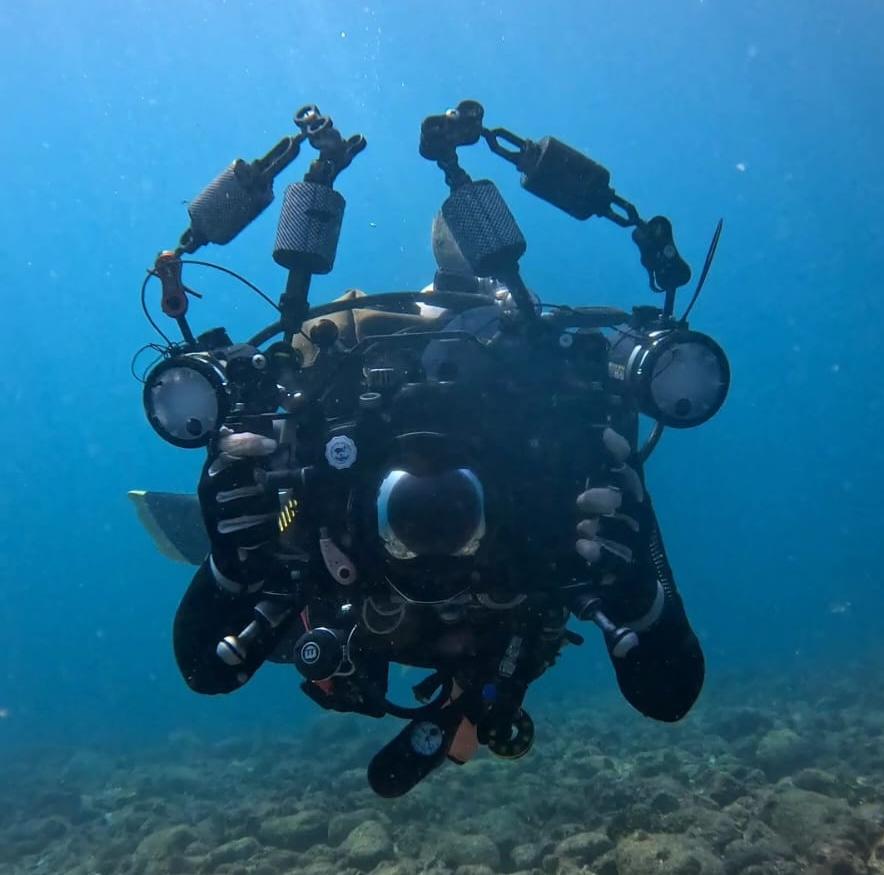
The different types of diving: free, scuba, technical, scientific, and commercial
From freediving to commercial diving, get to know the main types of diving that exist and what sets each one apart.
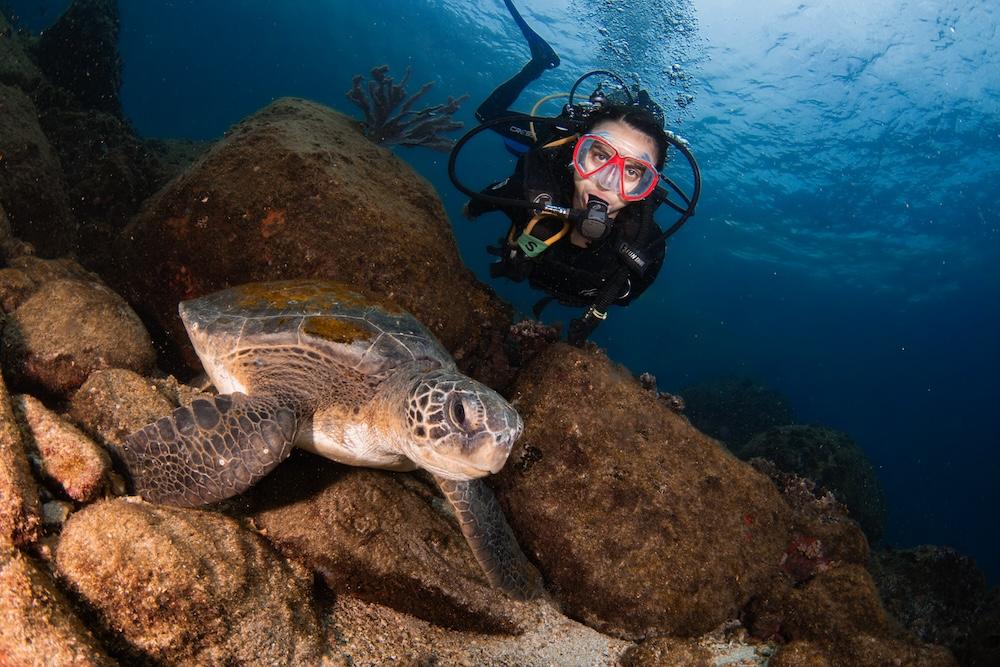
The history of scuba diving
From the earliest freedivers to diving bells, helmet suits, and the 1943 Aqua-Lung — the centuries-long journey that gave rise to modern scuba diving.
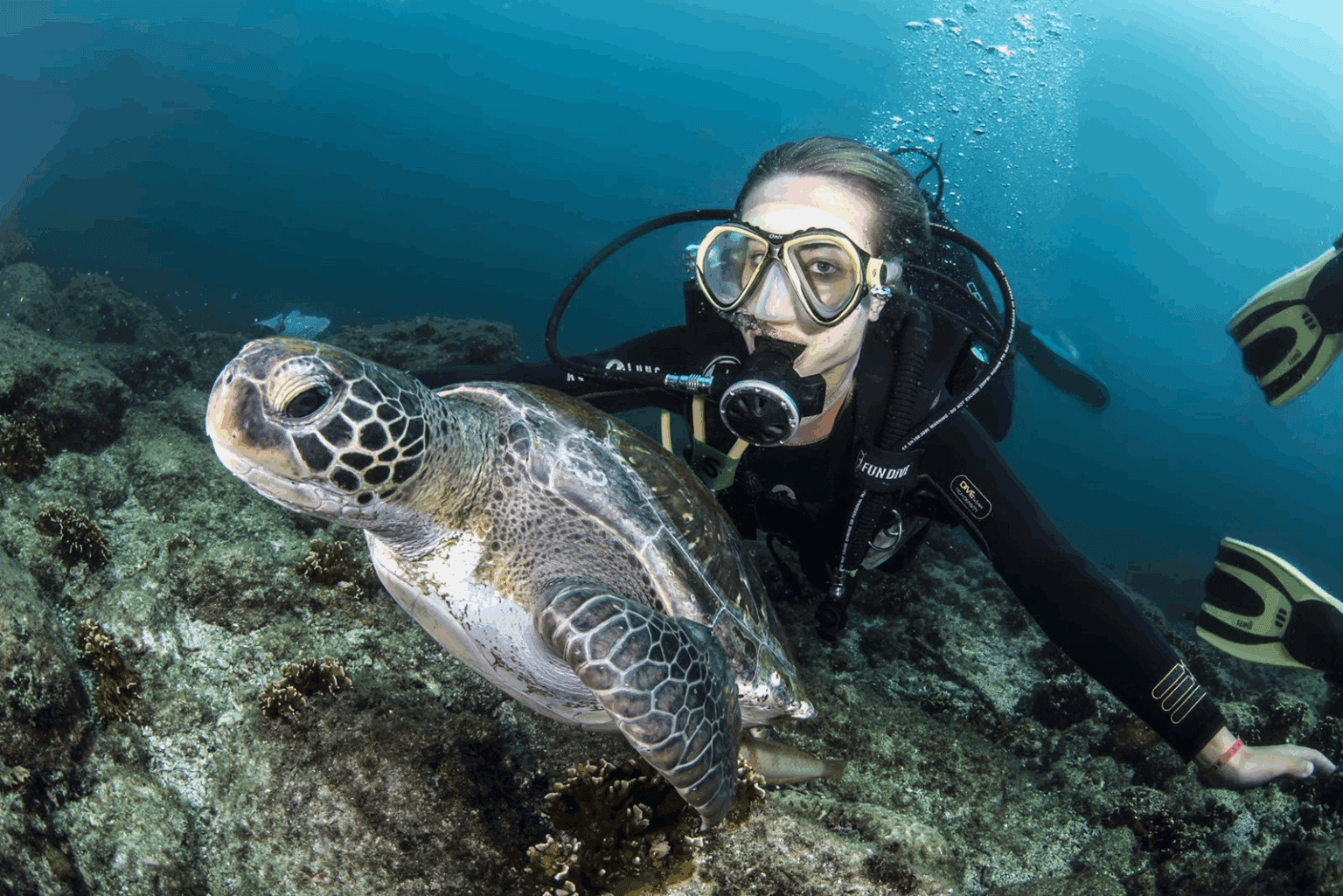
What you need to know before your first dive
Common questions from first-timers — health, fear, ears, glasses, and what actually matters before getting in the water.