
Why go on a night dive
The same dive site turns into a different world after sunset. Discover what makes night diving such a unique experience.

Why go on a night dive is a question that tends to come up once someone has done a few daytime dives and is looking for something different. The short answer: the same dive site you already know can feel completely new after sunset, with its own rhythm and marine life that behaves quite differently from what you see in daylight.
That's because much of marine life follows an activity cycle tied to light. Many species that spend the day tucked away in cracks and crevices of the reef come out to hunt at night, while others that are active during the day settle down to rest. The result is a very different cast of characters from a daytime dive — crustaceans, octopuses, and other nocturnal animals tend to show up far more often once the sun goes down.
Another element that makes night diving special is bioluminescence: under the right conditions, tiny marine organisms emit their own light when disturbed by the movement of the water, creating an almost magical effect around the diver. It isn't always possible to see this phenomenon with the same intensity everywhere, but when it happens, it tends to be one of the moments divers remember most.
The central tool for night diving is the dive light. It's not just for finding your way — the concentrated beam reveals vivid colors in coral and invertebrates that get washed out a bit by scattered sunlight during the day. It's common to notice reds, oranges, and purples that look far more intense at night than they do at the same spot in broad daylight.
There's also a more sensory dimension to night diving. With vision naturally limited to the beam of light around you, the other senses seem to take up more space, and the experience tends to bring a different sense of calm and focus compared to a daytime dive. For many experienced divers, it's exactly that more intimate atmosphere that makes night diving so memorable.
Despite being a rewarding experience, night diving is usually recommended once a diver already has some daytime dive experience and feels comfortable with buoyancy control, basic navigation, and handling their gear — since finding your way in the dark takes a bit more attention. Because of that, it's typically offered as a specialty or a guided experience, with an instructor or guide closely accompanying the group.
It's worth stressing that it isn't a scary experience — quite the opposite: with a good introduction and proper guidance, most divers describe night diving as calm, immersive, and surprisingly relaxing. The briefing beforehand usually covers communication signals adapted for use with a dive light and simple ways to stay in visual contact with the rest of the group in the dark.
In the end, night diving is a way to discover a whole new layer of a place you might already think you know well. For divers looking for something different, it's one of the most interesting ways to see the ocean — quite literally — in a whole new light.
You might also like
Why sharks matter to the ocean
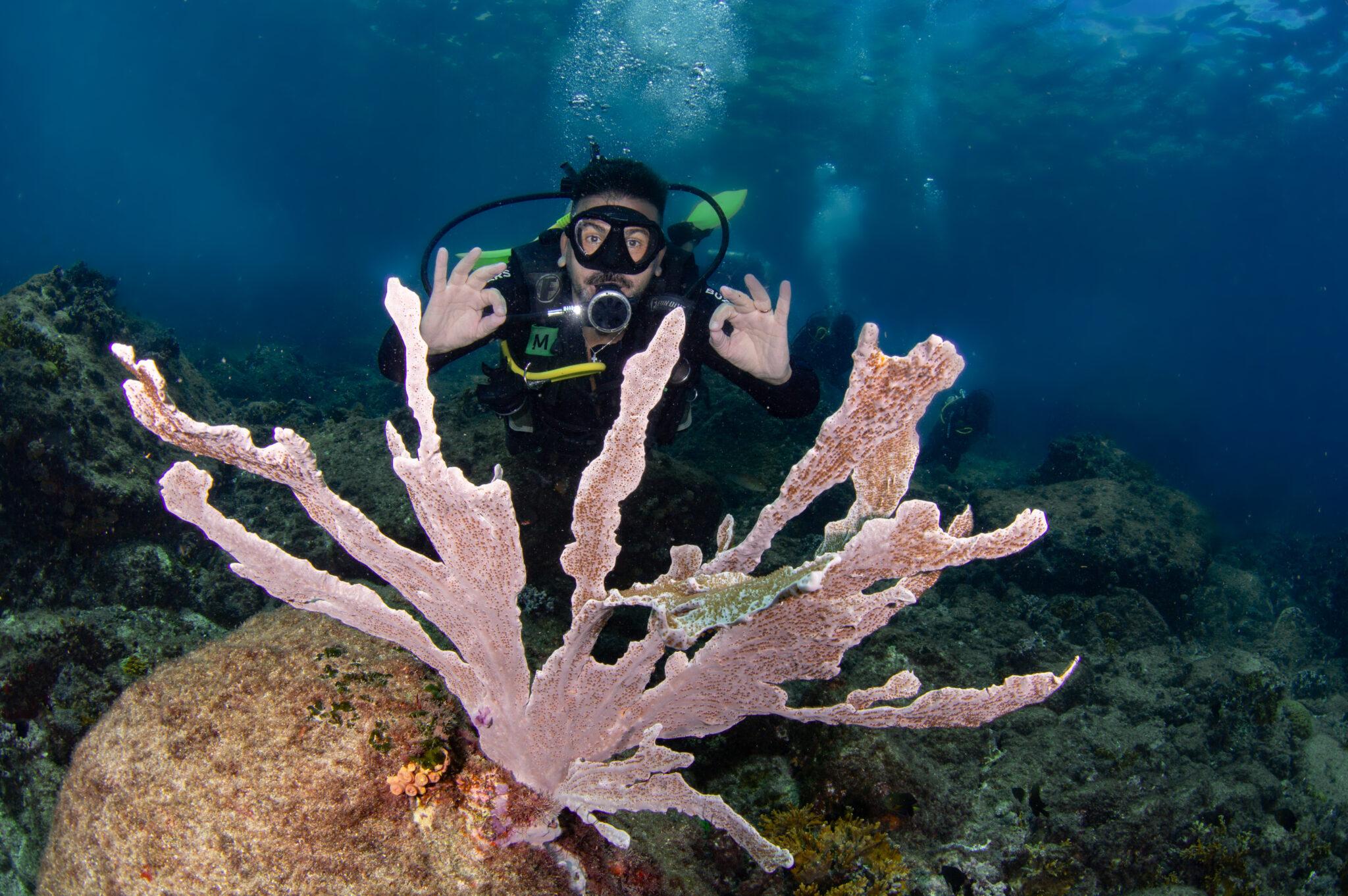
Sharks are often cast as villains of the sea, but they're a key piece in keeping reefs and marine life in balance.

How divers communicate underwater
You can't talk underwater, but you can communicate very well — meet the standard hand signals used on every dive.
What are the scuba diving certifications?
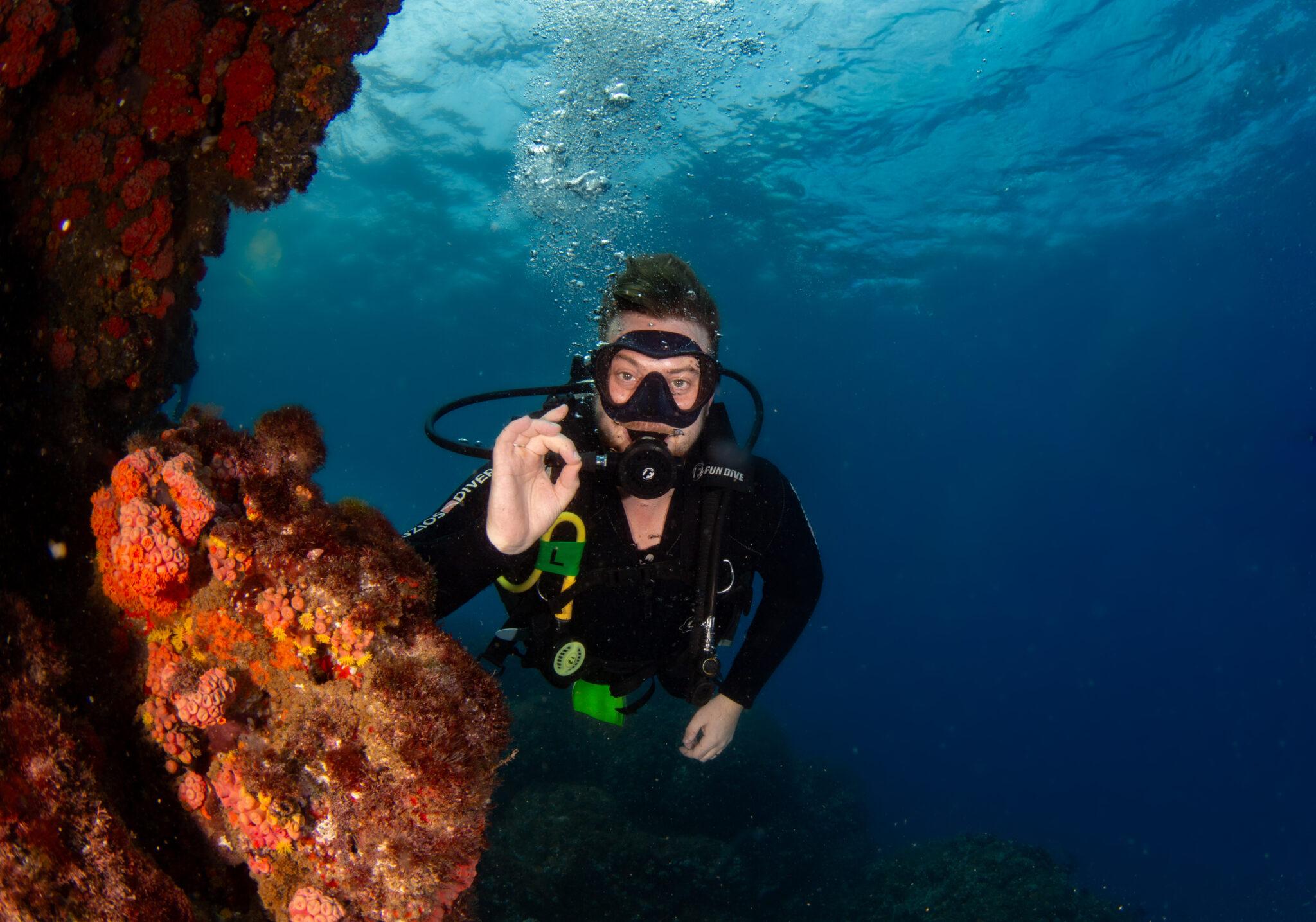
From a try-dive to the Instructor level: understand the PADI certification ladder and where you can start climbing it.