
What's the difference between recreational and technical diving?
Understand the real differences between recreational and technical diving — depth, decompression stops, gear, and training.
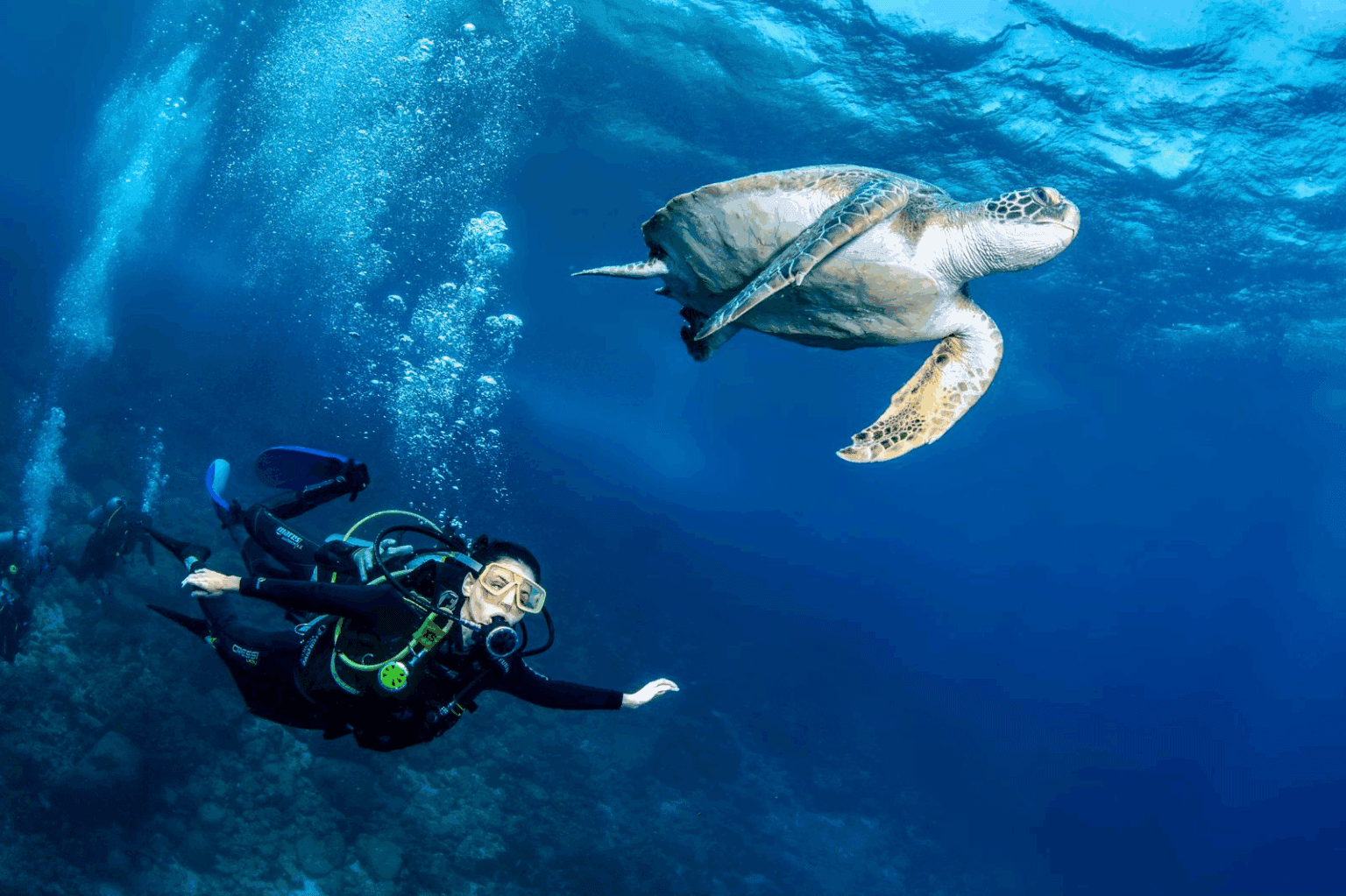
If you've heard the terms 'recreational diving' and 'technical diving' and wondered what actually separates them, the answer starts with a simple rule: whether you can go straight to the surface at any point in the dive. That rule, more than depth or gear, is what really defines the two categories.
Recreational diving — what the vast majority of certified divers practice, including everyone diving with Búzios Divers — never requires mandatory decompression stops. At any point in the dive, you can end it and ascend directly to the surface, following a safe ascent rate and a recommended safety stop. It's typically done with a single tank, with no need for extra gas supplies.
Within recreational diving, depth limits scale with certification. An Open Water Diver is qualified to dive to 18 meters (60 feet); Advanced Open Water Diver extends that to 30 meters (100 feet); and with additional training — like the Deep Diver specialty — divers can go to 40 meters (130 feet), the accepted absolute limit for no-decompression recreational diving.
Technical diving picks up exactly where recreational diving stops. It covers dives beyond 40 meters and/or dives with planned decompression stops, meaning the diver can no longer surface directly at will — decompression stages have to be completed at specific depths before the dive is over.
Beyond depth and decompression, technical diving often involves overhead environments, like the inside of a wreck or a cave, where there's no physical direct path to the surface either. To handle those demands, technical divers commonly carry multiple gas mixes — like trimix — along with dedicated staged decompression cylinders in addition to their main tank.
A recreational certification isn't enough to dive technically. It takes specialized training, offered through programs like PADI TecRec or agencies like TDI, covering gas planning, decompression calculations, and emergency management specific to this kind of diving.
For the vast majority of divers, recreational diving already opens the door to a lifetime of incredible experiences — reefs, shallow wrecks, marine life, and destinations like Búzios all fit comfortably within those limits. Technical diving is a separate path, for divers with specific goals after they've already built up real recreational experience. If you're just starting out, the first step is simply getting certified and logging dives — the rest comes with time.
You might also like
What is technical diving?
Diving beyond recreational limits: what defines technical diving, what gear it takes, and what the training path looks like.
What are the scuba diving certifications?
From a try-dive to the Instructor level: understand the PADI certification ladder and where you can start climbing it.
What is nitrox?
Understand what nitrox (enriched air) is, how it differs from regular air, and why it requires specific certification and care.