
How to choose the right scuba diving fins
Open heel or full foot, stiff or flexible blade, long or short: understand the differences before choosing your fins.
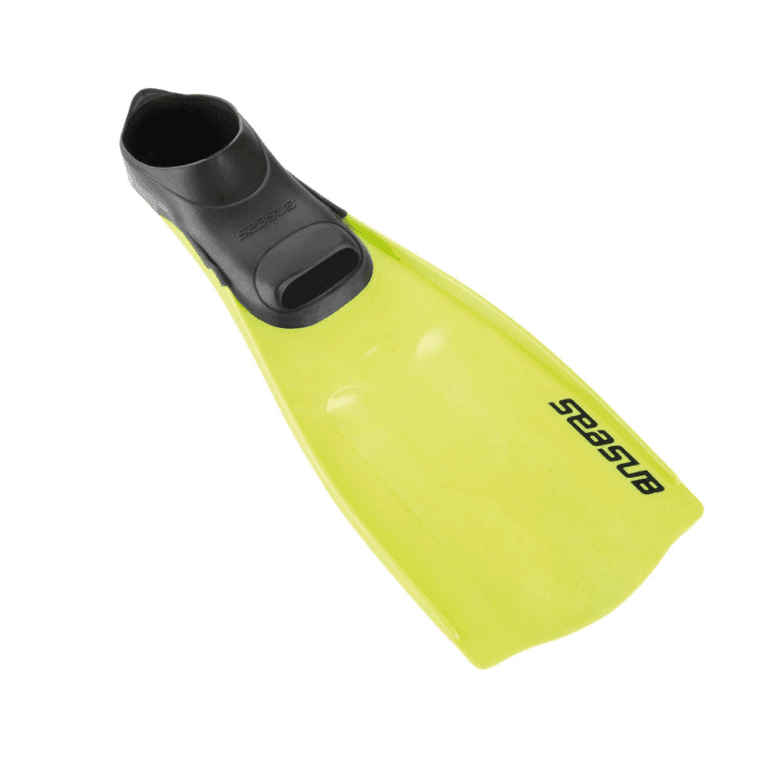
The right pair of dive fins makes a huge difference underwater — they're what turns leg effort into efficient propulsion, letting you move without wasting energy. With so many models on the market, it's worth understanding the main variables before deciding what to buy.
The first thing to look at is blade design. Traditional paddle fins, either stiff or semi-rigid, offer solid propulsion and control, making them a reliable choice for recreational diving in calm water. Split fins have a gap down the center of the blade that reduces water resistance on each kick, requiring less leg effort — great for saving energy on long dives, though they give up a bit of raw power in stronger currents.
Next comes the choice between open heel and full foot fins. Open heel fins have a heel opening secured by an adjustable strap and are worn with a neoprene bootie — the classic combination for colder water or for walking over rocks before entering the sea, which is common at plenty of dive sites in Brazil. Full foot fins slip directly onto bare feet, no bootie needed, and are lighter and simpler to use, a good fit for warm water and more casual diving.
Blade stiffness directly affects how much effort it takes to swim. Stiffer blades deliver more power and are favored by stronger divers or those regularly facing currents, but they tire out your calves faster over the course of a dive. More flexible blades take less effort and suit beginners or anyone who prioritizes comfort on longer, easier dives.
Length matters too: longer fins produce more propulsion and make more sense in open water, where you need to cover longer distances; shorter fins are more agile and easier to maneuver in tight spaces, like wrecks or low-visibility environments, where precise movements help avoid stirring up sediment from the bottom.
Material affects the decision too, quite literally. Rubber fins tend to be heavier, more durable, and offer strong propulsion; plastic or composite fins are lighter, easier to pack for a trip, and put less strain on your legs — trading off a bit of raw power. If you travel often to dive, fin weight inside your luggage is worth factoring in.
If you go with open heel fins, pay attention to the buckle system: easy-to-operate buckles make a real difference in practice, especially for adjusting the fit as bootie thickness or wetsuit thickness changes from one season to the next.
In the end, the ideal fin depends on your diving style — calm recreational dives, technical dives in current, frequent travel, or occasional outings. There's no universally 'best' model, just the one that matches how you actually dive. If you're just starting out, the rental gear at your dive operator will usually already include fins suited to your course level — buying your own tends to make more sense once you know what you actually value in the water.
You might also like

How to choose the right scuba diving mask
Seal, silicone skirt, field of view, and lenses: what actually matters when choosing — or buying — your dive mask.

6 tips to improve your buoyancy while diving
Weighting, breathing, BCD use, trim, and practice: the adjustments that actually improve your buoyancy control, dive after dive.
How to take care of your scuba diving gear
A piece-by-piece guide — regulator, wetsuit, fins, mask, tank, and computer — to keep your gear lasting longer and working better.