
Can I go scuba diving wearing contact lenses?
Yes, you can dive wearing contact lenses — but there's one specific mask precaution every lens wearer should know before getting in the water.
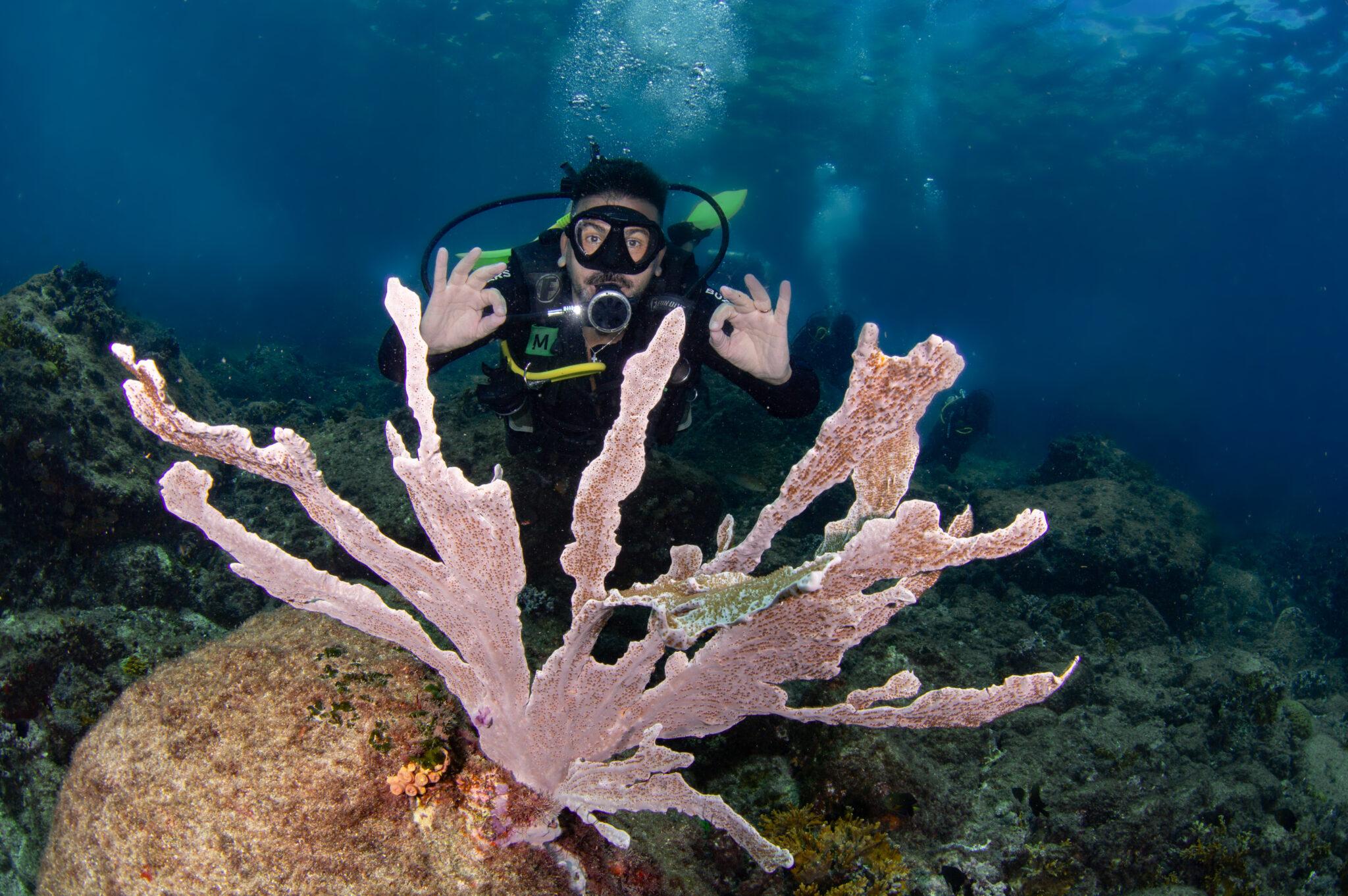
Whether it's safe to wear contact lenses is one of the questions we hear most from people considering a diving course or a Discover Scuba Diving experience. The good news: soft contact lenses are commonly and safely used by divers all over the world, with no special equipment needed in most cases.
The concern isn't the lens itself, but one specific scenario: if the mask floods with water — which can happen from a poor seal or a small bump — and the diver opens their eyes underwater to clear it, there's a risk of losing the lens along with the water draining out.
The standard advice to avoid that is simple: when clearing or removing the mask underwater, keep your eyes closed until the mask is back in place and the water has been expelled. This is already a basic skill taught in every PADI course, so lens wearers just need to apply it with a bit more attention.
For anyone who'd rather skip that extra precaution altogether, a prescription dive mask is a solid alternative, made to match your own vision correction. It solves the problem at the root: no contact lenses, nothing to lose, and your vision is corrected by the mask itself.
Rigid gas-permeable (RGP) lenses, on the other hand, are generally discouraged for diving. There's a small risk of gas bubbles forming under the lens during the pressure changes of descent and ascent, which can cause discomfort or, in rare cases, minor damage to the cornea.
It's worth noting that every eye and every lens type is different, so anyone with a specific concern — about their lens type, a pre-existing eye condition, or a history of refractive surgery — should check with an eye doctor before diving, to get advice tailored to their case.
In practice, for the vast majority of divers wearing soft lenses, the whole solution comes down to remembering to keep your eyes closed while handling the mask underwater. It's a small detail, easy to get used to, and shouldn't stop anyone from enjoying the dive.
You might also like
What you need to know before your first dive
Common questions from first-timers — health, fear, ears, glasses, and what actually matters before getting in the water.
Health Conditions for Diving
Why the pre-dive health check exists: an overview of the main conditions covered by PADI/RSTC standards, and the reasoning behind each one.
Is scuba diving safe?
An honest answer to the question we hear most from first-timers: yes, within your training and the safety rules — and you can try it with zero commitment.