
How to choose the right wetsuit for diving
Thickness, suit type, material, and zipper placement: what to consider to pick the right wetsuit for the water you dive in.
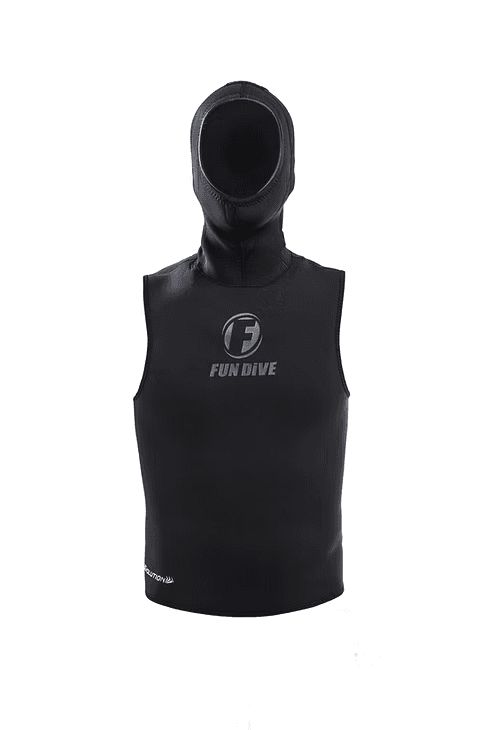
The wetsuit is a fundamental piece of gear — besides keeping your body warm, it protects against scrapes, sunburn, and accidental contact with coral or other marine life. With so many options for thickness, material, and style, understanding the differences goes a long way toward choosing the right suit for the water you typically dive in.
The first factor is suit type. A shorty covers the torso, shoulders, and part of the legs, prioritizing mobility over thermal insulation — it works fine in very warm tropical water, but it usually isn't enough for the water around the Búzios region, which is heavily affected by upwelling and can turn surprisingly cold at certain times of year, even though it sits in Rio de Janeiro state. A full wetsuit, covering the entire body, is the most versatile option and the one used day to day around here, balancing thermal protection with mobility. A semi-dry suit, with reinforced seals at the wrists, ankles, and neck, significantly reduces water circulation between skin and neoprene, helping keep you warm in colder water without requiring the specialty certification that a dry suit needs — dry suits are built for very cold or polar water and require specific training, since buoyancy control works differently with one on.
Neoprene thickness is arguably the most practical factor of all, since it's directly tied to water temperature. Thicknesses between 1mm and 3mm work well in very warm water; 5mm strikes a good balance between mobility and insulation in intermediate temperatures; and 7mm offers the most robust thermal protection, at the cost of somewhat less freedom of movement — best suited to colder water. Worth remembering: the sensation of cold is quite personal, and two people in the same water can feel it very differently, so this choice also comes down to knowing yourself.
An interesting alternative for anyone who doesn't want to invest in multiple full suits is to pair a mid-thickness wetsuit with add-on pieces — boots, gloves, a hood, even an extra neoprene vest worn underneath — that can be added or removed as water temperature changes through the year, without needing several complete suits.
Neoprene is the standard material, trapping a thin layer of water between skin and fabric that helps keep your body warm through conduction. There are variations: traditional neoprene is the most common, with good protection and moderate stretch; super-flexible versions are lighter and offer more freedom of movement; and some models use a titanium-lined coating that reflects some of your body heat back, improving insulation without adding thickness.
Fit is just as crucial: a suit that's too loose lets in too much water, undermining thermal insulation; one that's too tight restricts movement and tires you out faster. Sealing at the extremities — wrists, ankles, neck — deserves special attention, as does mobility at the shoulders, elbows, and knees, which you can only really judge by trying the suit on.
Zipper placement varies too. A back zip is the most common, easy to put on and take off by yourself, though it lets in a bit more water. A chest zip improves sealing and back flexibility, but generally requires help getting in and out. Some models skip the zipper entirely, prioritizing a fully sealed fit, sometimes split into two pieces to make them easier to put on.
In the end, the right suit depends on where and how often you dive. Divers who always dive the same conditions usually do fine with a single, well-chosen suit; those who vary destinations or seasons more tend to build up more than one option over time. If this is your first dive, or you're still deciding whether it's worth investing in your own gear, don't worry — all the wetsuits used on Búzios Divers dives and courses are already suited to local conditions and fitted to you at the time of the activity.
You might also like
Diving in Búzios: what to expect
An honest introduction to what makes Búzios such a sought-after diving destination — no exaggerated promises, just what's genuinely worth knowing before you go.
How to take care of your scuba diving gear
A piece-by-piece guide — regulator, wetsuit, fins, mask, tank, and computer — to keep your gear lasting longer and working better.
What you need to know before your first dive
Common questions from first-timers — health, fear, ears, glasses, and what actually matters before getting in the water.