
The first female diver in history
The legendary story of a diver during the Persian Wars, in the 5th century BC — one of the earliest Western records linking diving to acts of courage.
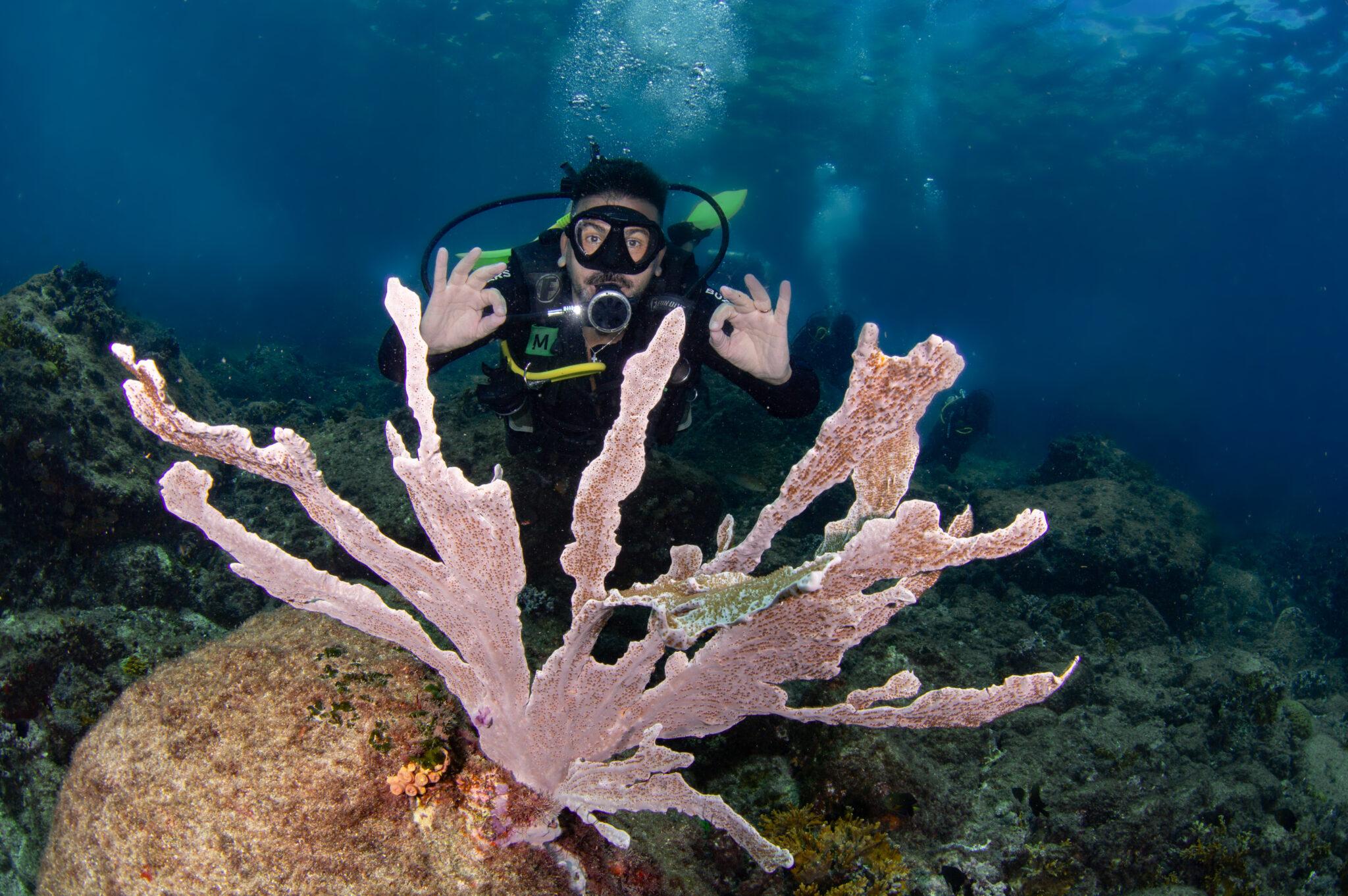
Long before any certification or dive gear existed, history was already recording acts of courage underwater — and one of the oldest and most intriguing diving stories involves, alongside her father, a woman said to have risked her life during the Greco-Persian Wars, in the 5th century BC.
The best-known account comes from the Greek historian Herodotus, who, in his 'Histories,' tells the story of Scyllias, a diver from the city of Scione serving the Persian fleet under Xerxes. According to Herodotus, Scyllias defected to the Greek side shortly before the Battle of Artemisium, in 480 BC, supposedly swimming a long distance underwater to escape — though Herodotus himself admits doubts about the feat, suggesting Scyllias may have arrived by boat and simply claimed to have swum.
Centuries later, the geographer Pausanias added another chapter to the story: according to him, Scyllias had a daughter named Hydna, also a skilled diver, who joined him on an even bolder mission — diving during a storm to cut loose the anchor cables of Persian ships near Mount Pelion, helping sink part of the enemy fleet. As a reward, father and daughter reportedly received statues at the sanctuary of Delphi, erected by the Greek Amphictyonic League.
It's worth noting that this is an ancient story, told by sources that already blended fact and legend, and that has passed through centuries of retellings — including more popular versions in which Scyllias's daughter appears under different names, such as 'Cyana.' Modern historians debate how accurate the specific details are (the distance swum, exactly who carried out the sabotage), but there's reasonable consensus that divers — and, according to Pausanias, divers who were women too — were genuinely used in military operations in ancient Greece.
What is well documented, technically speaking, is that the practice itself existed: in the 5th century BC, Greek divers already used hollow reeds as a rudimentary kind of snorkel and were capable of relatively deep freedives to recover sunken treasure, repair ship hulls, and, as in the case of Scyllias and Hydna, sabotage enemy vessels in wartime. That kind of military and salvage diving was a real, valued skill in antiquity.
Regardless of the exact details behind Hydna's legend, the idea of women diving professionally isn't an isolated case in ancient history: in Japan, the tradition of 'ama' divers — women who freedive for pearls, shellfish, and seafood — is documented for more than two thousand years and, in smaller numbers, survives to this day.
Whatever the precise name behind the legend, the story of a courageous diver during the Persian Wars remains one of the earliest Western records linking diving to acts of bravery — a reminder that humanity's relationship with the ocean depths has, for millennia, also been a story of courage.
You might also like
The history of scuba diving
From the earliest freedivers to diving bells, helmet suits, and the 1943 Aqua-Lung — the centuries-long journey that gave rise to modern scuba diving.

Jacques Cousteau: the pioneer of scuba diving
How a French naval officer with a passion for the ocean helped invent the Aqua-Lung and forever changed the way the world dives and sees the seas.
The history of the major scuba diving certification agencies
Where PADI, NAUI, CMAS, and SSI come from — the origin of the certification agencies that still shape how the world learns to dive.